
it’s science is for people who suspect that a living cell, a thinking brain and a quiet mind share a common root.
Every week, one idea from science, followed slowly. What a bit actually is. Why forgetting has a price, and who measured it. Why still water is not a quiet mind.
Each essay starts from something you can picture: a formula carved on Boltzmann’s headstone in Vienna, a glass bead held by a laser in Lyon, an olive tree in Crete so hollow you can see through it. Then it follows one idea until it reaches the cell, the brain and the mind reading it.
Around a thousand words, ten minutes with your coffee, no physics degree required.
How this started
I have always sensed a unity beneath the different shades of life, and like a child I never stopped asking why. In 1944 Schrödinger asked what life is. Eighty years later the question still burns: life holds its balance only because it never stops moving, like a spinning top. In the research I do with my collaborators, we believe this moving balance stands on three things, irreducibly entangled: energy, mass and information.
I started writing in March 2026 under the name HoloSutra, a sutra being a thread and holo the whole, to look for the threads that hold the whole together. it’s science is the same search under a new name.
Why “it’s science”?
Because science is more than a laboratory, an equation or a journal. It is a way of paying attention: looking at the world closely enough that it can surprise you, and changing your mind when it does. it’s science looks for that attention in ordinary things, a glass of water or an olive tree, and follows it carefully, never further than the evidence goes.
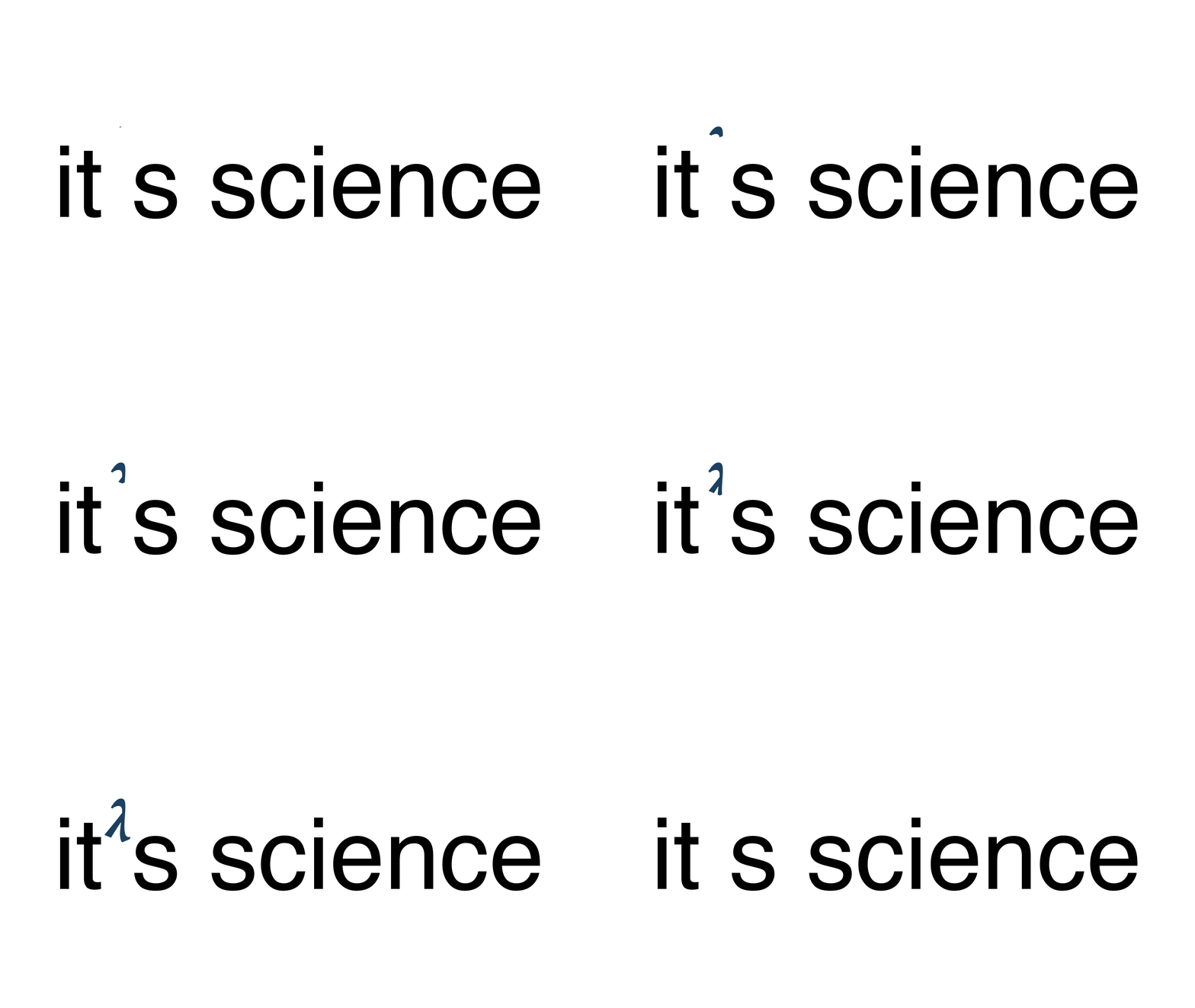
The apostrophe in the name is a λ. In physics, λ is a wavelength. In a nerve cell, it is the length constant: how far a signal travels along the membrane before it fades to about 37 percent of its strength. This publication asks the same of ideas: how far one from physics can travel into a living thing before it fades.
Start with these
What a Bit Actually Is

On a Saturday evening in February 1946, a new program went out on the Mutual Broadcasting System from a theater on West 48th Street in New York. Four panelists. One hidden object, mailed in by a listener. Twenty questions, each answerable only yes or no. The show was called Twenty Questions, and it ran, in one format or another, for the better part of a…
The Price of Forgetting

In a laboratory in Lyon, in 2012, a group of physicists built the smallest memory anyone had ever built, and then measured what it costs to wipe it.
Still Water Is Not a Quiet Mind

It is three in the morning and your mind will not settle. The afternoon’s conversation plays again, with better lines this time, and behind it come the email you forgot to send and a number that still does not add up. Nothing arrives in order. It all comes up at once, like silt kicked up from the bottom of a glass, and hangs there in the dark.
Every essay is free.
Who writes this
I’m Tommaso Firaux. I study how energy, mass and information weave together to produce living systems and, sometimes, minds that wonder about themselves. My research sits at the intersection of biophysics, neuroscience and complex systems. I write in English and Italian, depending on where the thought takes me.
The family
it’s science has two sisters. it’s art, by Vittorio Zappa, stands in front of one artwork at a time. it’s philosophy, by Floris van Doorn, thinks through one question from everyday life at a time. Read together, they look at the same world three ways.
Questions
Do I need to know physics? No. Each essay starts from something you can picture and explains what it uses along the way.
Is it free? Yes. Every essay is free.
Can I write to you? Please do. Reply to any email, or leave a comment under an essay.
What happens when I subscribe? One email a week, usually on Thursday. No digests, no filler in between.
What if I want to leave? There is an unsubscribe link at the bottom of every email. No hard feelings; keep the glass of water.
it’s science publishes one essay a week on a single idea from physics, biology and neuroscience: information and entropy, energy and memory, cells, brains and contemplative states. Each essay starts from a concrete scene and follows the evidence no further than it goes. The science of life and mind, in ten minutes a week.
If you know a scientist who sometimes meditates, or a meditator who sometimes reads neuroscience, send them this page.
