



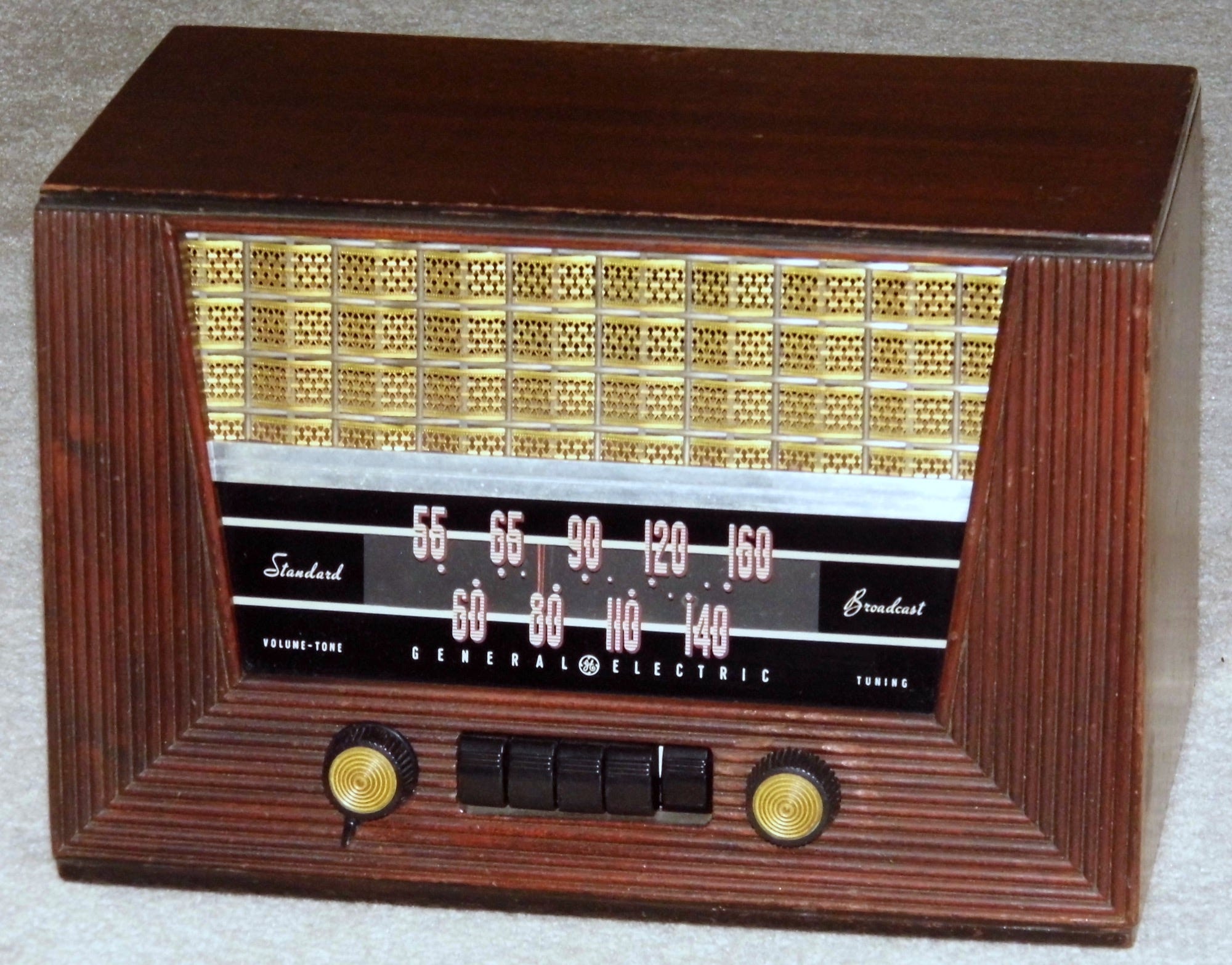
On a Saturday evening in February 1946, a new program went out on the Mutual Broadcasting System from a theater on West 48th Street in New York. Four panelists. One hidden object, mailed in by a listener. Twenty questions, each answerable only yes or no. The show was called Twenty Questions, and it ran, in one format or another, for the better part of a decade. The object listeners sent in more often than any other, according to the show’s own historians, was Winston Churchill’s cigar.
Nobody playing along at home thought they were doing mathematics. They were guessing. Is it alive. Is it larger than a person. Is it in this room right now. Every answer threw half the world away and kept the other half, and nobody mourned the half that went, because the game was only ever interested in what was left.
Two years later, an engineer at Bell Labs named Claude Shannon published a paper that never mentions the radio show. He was not trying to explain a parlor game. He was trying to explain a telephone wire: how much of it you actually need, and how to know when you have used enough. It turned out to be the same problem, and solving it meant throwing something away as well.
The Word Nobody Meant to Coin
What Shannon threw away was meaning, and he did it on the first page, without apology. Messages frequently have meaning, he granted. They refer to things, they correlate with physical or conceptual entities. And then: “These semantic aspects of communication are irrelevant to the engineering problem.”
Irrelevant is a strong word to use about the thing most people would say communication is for. But it bought him something no one had been able to get any other way. Once meaning is out of the account, a message is no longer judged by what it says. It is judged only by how much it narrows down what it could have said, and that is a quantity you can put a number on.
The smallest such number has a name. If there are two equally likely possibilities and one question settles which is true, that question is worth exactly one bit. A fair coin flip is the cleanest bit there is: heads or tails, nothing else it could have been, one question, one answer, done.
Shannon did not coin the word. The same page hands it to a colleague, in a single sentence:
If the base 2 is used the resulting units may be called binary digits, or more briefly bits, a word suggested by J. W. Tukey.
It is a strange kind of monument, a paper that reshaped the twentieth century, giving away its most famous word in a subordinate clause.
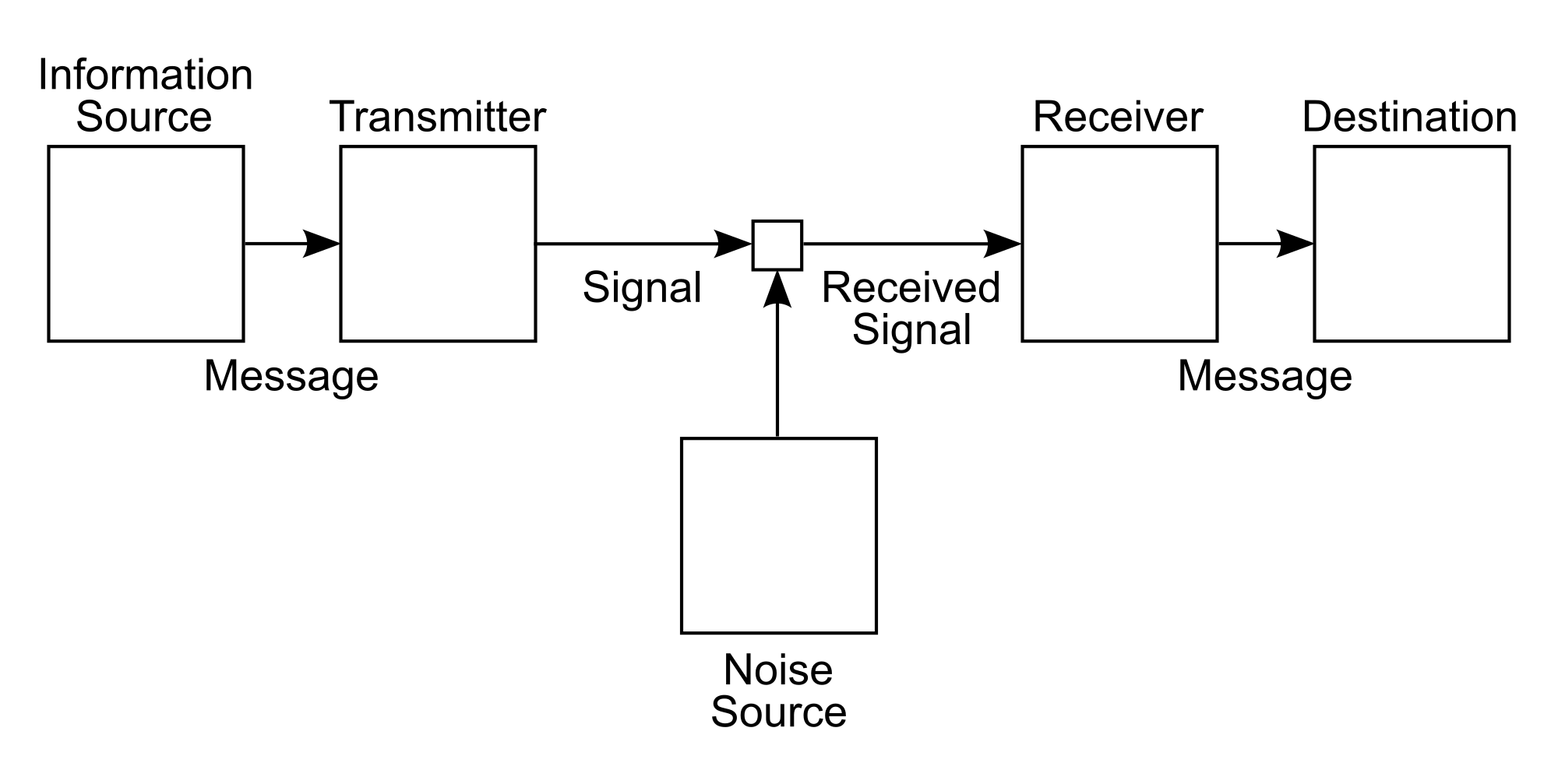
The word was small, but what it measured was not. Twenty good questions can sort among more than a million possibilities, because each one halves what remains: one question leaves two candidates, two leave four, three leave eight, and by the twentieth the field has been cut in half twenty times over. That is enough to land on almost anything a listener could put in an envelope. What the panel was spending, all along, was bits.
Shannon never described it as a guessing game. His own words for the quantity were choice and uncertainty: a measure, as he put it, of how much choice is involved in selecting an event, or how uncertain we are of its outcome. Not what the outcome means. How much of the world it rules out.
The Word Before the Word
So the theory works, and it works precisely because meaning was removed from it. That is worth sitting with, because the removal was not a discovery about information. It was a decision about what to stop counting, made by someone with a wire to build. And the word he was making that decision about had been in English for six hundred years already, meaning something else.
Inform entered the language in the early fourteenth century, from Old French, from the Latin informare: in, into, plus formare, to shape. To inform something, in the oldest sense, was to give it form. The first English use was to train or instruct, to shape a mind the way a hand shapes clay. The sense we reach for now without thinking, to report facts, to pass along data, is not recorded until decades later. It is the younger, narrower branch of the same word.
This is a resemblance, not evidence. A word’s history is not an argument. But the older sense describes something Shannon’s does not, and the difference is not decorative: one of them involves two parties and a change, and the other involves a count.
What Twenty Questions Could Not Hold
The next time a hidden object survives all twenty questions, that is not a failure of the game. It means the object carried more bits than the panel had questions left to spend.
Shannon’s stripped down bit was strong enough to build every wire, disc, and screen standing between this sentence and you, and it is tempting to stop there, with meaning subtracted and the problem solved. But subtracting something is not the same as showing it was never there.
A quieter tradition disagrees. The philosopher Gilbert Simondon argued that information is not a property a message carries in itself at all. It arises from the tension between two orders that are not yet in phase with each other, and it exists only in that relation, never in one of the terms alone. Follow that thought one step further, which he did not do in these words, and to inform stops meaning to transmit and starts meaning something closer to its Latin root: to change the form of the other, so that the two of you are no longer out of phase.
Whether that survives contact with two people instead of two circuits is a question this series will keep returning to, without settling it here. What the panel spent, in the end, was twenty bits. What the game was actually made of was two parties, and the distance between them, and the slow work of closing it. Four essays from now, that asking already has a name: Energy, Mass, Information, three quantities this publication’s own model holds together, and the reason it exists at all.
Earlier in this thread:
You Are Not a Closed System

A woman crying in a parking lot. Engine off, hands still on the wheel. The kind of crying that has no audience.